Lessons on Aging Well, From a 105-Year-Old Cyclist

Lessons on Aging Well, From a 105-Year-Old Cyclist

At the age of 105, the French amateur cyclist and world-record holder Robert Marchand is more aerobically fit than most 50-year-olds — and appears to be getting even fitter as he ages, according to a revelatory new study of his physiology.

The study, which appeared in December in The Journal of Applied Physiology, may help to rewrite scientific expectations of how our bodies age and what is possible for any of us athletically, no matter how old we are.
Many people first heard of Mr. Marchand last month, when he set a world record in one-hour cycling, an event in which someone rides as many miles as possible on an indoor track in 60 minutes.

Mr. Marchand pedaled more than 14 miles, setting a global benchmark for cyclists age 105 and older. That classification had to be created specifically to accommodate him. No one his age previously had attempted the record.

Mr. Marchand, who was born in 1911, already owned the one-hour record for riders age 100 and older, which he had set in 2012.

It was as he prepared for that ride that he came to the attention of Veronique Billat, a professor of exercise science at the University of Evry-Val d’Essonne in France. At her lab, Dr. Billat and her colleagues study and train many professional and recreational athletes.

She was particularly interested in Mr. Marchand’s workout program and whether altering it might augment his endurance and increase his speed.

Conventional wisdom in exercise science suggests that it is very difficult to significantly add to aerobic fitness after middle age. In general, VO2 max, a measure of how well our bodies can use oxygen and the most widely accepted scientific indicator of fitness, begins to decline after about age 50, even if we frequently exercise.

But Dr. Billat had found that if older athletes exercised intensely, they could increase their VO2 max. She had never tested this method on a centenarian, however.

But Mr. Marchand was amenable. A diminutive 5 feet in height and weighing about 115 pounds, he said he had not exercised regularly during most of his working life as a truck driver, gardener, firefighter and lumberjack. But since his retirement, he had begun cycling most days of the week, either on an indoor trainer or the roads near his home in suburban Paris.

Almost all of this mileage was completed at a relatively leisurely pace.
Dr. Billat upended that routine. But first, she and her colleagues brought Mr. Marchand into the university’s human performance lab.

They tested his VO2 max, heart rate and other aspects of cardiorespiratory fitness. All were healthy and well above average for someone of his age. He also required no medications.

He then went out and set the one-hour world record for people 100 years and older, covering about 14 miles.

Afterward, Dr. Billat had him begin a new training regimen. Under this program, about 80 percent of his weekly workouts were performed at an easy intensity, the equivalent of a 12 or less on a scale of 1 to 20, with 20 being almost unbearably strenuous according to Mr. Marchand’s judgment. He did not use a heart rate monitor.
The other 20 percent of his workouts were performed at a difficult intensity of 15 or above on the same scale. For these, he was instructed to increase his pedaling frequency to between 70 and 90 revolutions per minute, compared to about 60 r.p.m. during the easy rides. (A cycling computer supplied this information.) The rides rarely lasted more than an hour.
Mr. Marchand followed this program for two years. Then he attempted to best his own one-hour track world record.
First, however, Dr. Billat and her colleagues remeasured all of the physiological markers they had tested two years before.
Mr. Marchand’s VO2 max was now about 13 percent higher than it had been before, she found, and comparable to the aerobic capacity of a healthy, average 50-year-old. He also had added to his pedaling power, increasing that measure by nearly 40 percent.
Unsurprisingly, his cycling performance subsequently also improved considerably. During his ensuing world record attempt, he pedaled for almost 17 miles, about three miles farther than he had covered during his first, record-setting ride.
He was 103 years old.
These data strongly suggest that “we can improve VO2 max and performance at every age,” Dr. Billat says.
There are caveats, though. Mr. Marchand may be sui generis, with some lucky constellation of genes that have allowed him to live past 100 without debilities and to respond to training as robustly he does.

So his anecdotal success cannot tell us whether an 80/20 mix of easy and intense workouts is necessarily ideal or even advisable for the rest of us as we age. (Please consult your doctor before beginning or changing an exercise routine.)

Lifestyle may also matter. Mr. Marchand is “very optimistic and sociable,” Dr. Billat says, “with many friends,” and numerous studies suggest that strong social ties are linked to a longer life. His diet is also simple, focusing on yogurt, soup, cheese, chicken and a glass of red wine at dinner.
But for those of us who hope to age well, his example is inspiring and, Dr. Billat says, still incomplete. Disappointed with last month’s record-setting ride, he believes that he can improve his mileage, she says, and may try again, perhaps when he is 106.

(Source: NY Times – https://nyti.ms/2kNgePy)
You might also be interested in

News and Events

Ear Wax Microsuction: A Safe and Effective Solution

Ear wax, also known as cerumen, is a natural substance that protects the ears by trapping dust, dirt, and bacteria. However, excessive wax buildup can cause symptoms such as hearing loss, earache, tinnitus (ringing in the ears), dizziness, and a feeling of fullness in the ear. When this occurs, professional ear wax removal may be necessary.

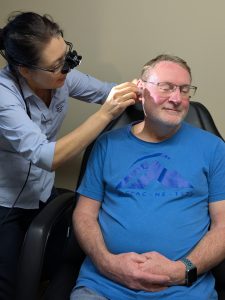
Microsuction is a modern and highly effective method of ear wax removal. The procedure uses a small medical suction device and a microscope or magnifying loupe to carefully remove wax from the ear canal. Unlike ear syringing, microsuction does not involve water, making it a safer option for many patients, particularly those with a history of ear infections, perforated eardrums, or previous ear surgery.

The procedure is typically quick, taking between 15 and 30 minutes, and most patients experience immediate improvement in hearing and comfort. Microsuction is generally well tolerated, although some people may notice a mild tickling sensation or temporary sensitivity during treatment.

For the best results, patients are often advised to soften the wax with a recommended spray for several days before their appointment. Ear wax should not be removed with cotton buds, as these can push wax deeper into the ear canal and increase the risk of blockage.

Microsuction is considered one of the safest and most precise methods of ear wax removal when performed by a trained healthcare professional. Ear wax microsuction services are available at Jervis Bay Hearing Centre, where experienced clinicians provide gentle, professional ear care to help restore hearing comfort and maintain ear health. Whether you are experiencing blocked ears, reduced hearing, or discomfort caused by excess wax, the team at Jervis Bay Hearing Centre can assess and treat your condition using safe and effective microsuction techniques.
Ready to hear clearly again? Ear wax microsuction is available at Jervis Bay Hearing Centre, providing a fast, safe, and effective solution for blocked ears and excess wax buildup. Don’t put up with muffled hearing or discomfort any longer. Book your appointment today and experience the difference professional ear care can make. Call Jervis Bay Hearing Centre.

Read More »
News and Events

From Berlin: Sharing Three Decades of Tinnitus Expertise

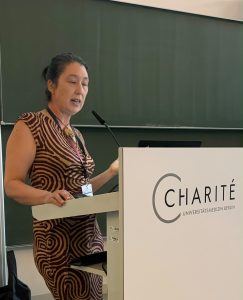
Just over a year ago, I had the privilege of being invited to speak at the International Tinnitus Research Initiative in Berlin. Today, stood at the podium delivering two presentations on tinnitus, drawing on more than 30 years of experience in audiology. It was an honour, and a rewarding opportunity to genuinely contribute to ongoing discussions in this complex and multifaceted field.

The audience consisted of leading academics from around the world, researchers, epidemiologists and clinical practitioners, creating an exceptional environment for the exchange of ideas and expertise. My presentations outlined my approach as well as the emergence of somatic symptoms and Hypercusis with severe distressing tinnitus from a clinical perspective. I was also grateful to join a symposium presenting evidence based practice and joining a leading UK ENT, Psychiatrist for robust discussion. Our profession has made such progress in understanding this complex and often challenging condition.

I was delighted by the positive reception from colleagues. Presenting to such a distinguished international audience is always encouraging and, if I’m honest, I’m feeling a little chuffed and more than a little relieved now that the talks are complete.

I was also deeply humbled to represent Jervis Bay Hearing Centre on the world stage. It was a privilege to showcase a leading-edge approach to tinnitus care, one that is firmly grounded in both scientific evidence and decades of clinical experience. Being able to share practical outcomes and contribute to global conversations about tinnitus management reinforced the value of combining research excellence with patient-centred care.

One of the most valuable aspects of meetings like these is the opportunity to collaborate and learn across disciplines. Tinnitus is a multifaceted condition that benefits from the collective expertise of Audiologists, Neuroscientists, Psychologists, Physicians, and Researchers working together toward better outcomes for patients.

After more than three decades in clinical practice, I remain convinced that continuing education is fundamental to delivering excellent hearing healthcare. As new research emerges, lifelong learning enables clinicians to tackle increasingly difficult problems, including complex tinnitus cases. By sharing knowledge, challenging assumptions, and embracing innovation, we move closer to our shared goal of reducing patient suffering and improving quality of life for those affected by tinnitus.

Read More »
News and Events

Reflections, on winning a business award 2026.

Winning a business award is not just recognition of excellence; it is a reflection of a deep commitment to the community we serve. Jervis Bay Hearing Centre is proud to be an independent, locally owned audiology practice dedicated to improving the hearing health and wellbeing of people across the Shoalhaven region, including Vincentia, Nowra, Ulladulla, Sussex Inlet, and surrounding communities.

For more than two decades, our mission has been to provide accessible, evidence-based, and person-centred hearing care that empowers individuals to reconnect with the people, activities, and experiences that matter most. We believe hearing healthcare is about more than technology. It is about listening, understanding, and supporting every person on their unique journey. Our comprehensive services include hearing assessments for adults and children, hearing aid fitting and rehabilitation, tinnitus and sound sensitivity management, cochlear implants, wax microsuction, workplace hearing assessments, and community education programs.

We are passionate advocates for early intervention, preventative hearing health, and ensuring regional Australians can access high-quality services close to home. At Jervis Bay Hearing Centre, our success is measured not only by business growth but by the lives we help transform. This award celebrates our dedicated team, our trusted partnerships, and our unwavering commitment to delivering exceptional hearing healthcare that enriches lives and strengthens our community.

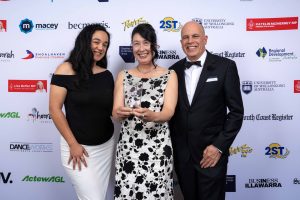
We are humbled to win the Business Award for Excellence and are grateful to all our wonderful patients who have given us their unwavering support and trust.

Read More »