From Berlin: Sharing Three Decades of Tinnitus Expertise
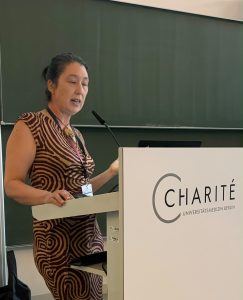
Just over a year ago, I had the privilege of being invited to speak at the International Tinnitus Research Initiative in Berlin. Today, stood at the podium delivering two presentations on tinnitus, drawing on more than 30 years of experience in audiology. It was an honour, and a rewarding opportunity to genuinely contribute to ongoing discussions in this complex and multifaceted field.
The audience consisted of leading academics from around the world, researchers, epidemiologists and clinical practitioners, creating an exceptional environment for the exchange of ideas and expertise. My presentations outlined my approach as well as the emergence of somatic symptoms and Hypercusis with severe distressing tinnitus from a clinical perspective. I was also grateful to join a symposium presenting evidence based practice and joining a leading UK ENT, Psychiatrist for robust discussion. Our profession has made such progress in understanding this complex and often challenging condition.
I was delighted by the positive reception from colleagues. Presenting to such a distinguished international audience is always encouraging and, if I’m honest, I’m feeling a little chuffed and more than a little relieved now that the talks are complete.
I was also deeply humbled to represent Jervis Bay Hearing Centre on the world stage. It was a privilege to showcase a leading-edge approach to tinnitus care, one that is firmly grounded in both scientific evidence and decades of clinical experience. Being able to share practical outcomes and contribute to global conversations about tinnitus management reinforced the value of combining research excellence with patient-centred care.
One of the most valuable aspects of meetings like these is the opportunity to collaborate and learn across disciplines. Tinnitus is a multifaceted condition that benefits from the collective expertise of Audiologists, Neuroscientists, Psychologists, Physicians, and Researchers working together toward better outcomes for patients.
After more than three decades in clinical practice, I remain convinced that continuing education is fundamental to delivering excellent hearing healthcare. As new research emerges, lifelong learning enables clinicians to tackle increasingly difficult problems, including complex tinnitus cases. By sharing knowledge, challenging assumptions, and embracing innovation, we move closer to our shared goal of reducing patient suffering and improving quality of life for those affected by tinnitus.