Glasses Are Cool.  Why Aren’t Hearing Aids?

Glasses Are Cool, Why Aren’t Hearing Aids?

If I do my job right, this column might actually change your life. More important, it might change the lives of the people you love.
But first, I need to talk about Elton John’s glasses. It was my first concert. Philadelphia Spectrum, 1972. Elton opened up with “Tiny Dancer” on solo piano. Later, during “I Think I’m Going to Kill Myself,” a character named Legs Larry Smith came out and tap danced.
But none of that is what I remember best. What has stayed with me all these years has been those stylish glasses. Spotlights flooding the stage twinkled off his rims.
Back then, I wore glasses, too. Until that moment, I had never thought of them as a fashion statement. I just thought of them as a way of existing in the world.
But of course glasses were, and are, a fashion statement. Eyewear practically defines certain people’s style. Teddy Roosevelt and his pince-nez. Iris Apfel and her signature circular specs. Mr. Peanut, rocking a monocle. In my 20s I knew a girl with perfect eyesight who even had a pair of clear glasses designed for her. “So that I look hot,” she explained, “when I take them off.”

Why, I wonder, is it that devices to keep you from being blind are celebrated as fashion, but devices to keep you from being deaf are embarrassing and uncool? Why is it that the biggest compliment someone can give you about your hearing aids is “I can hardly see them”?

Hearing loss is endemic, and not just for older people. Almost one in four Americans between the ages of 20 and 69 who think they have good hearing actually have some hearing impairment. Among those in their 50s, 4.5 million people have some hearing loss. How many wear devices that would enable them to better hear the world? Less than 5 percent.

Wearing hearing aids can change your life in an instant — not to mention that of the people you love, whose actual voices you may have been unable to hear. But we don’t get help. Because coverage by insurance carriers is inconsistent. Because we don’t know where or how to get our hearing tested. Because we’re afraid of what others might think. Because hearing loss is uncool.

This needs to change. Start with insurance: Hearing aids can be expensive, but employers need to know that people who can’t hear can’t do their jobs well. Education matters, too: People who thought it was dumb for Donald Trump to look directly at the sun during the solar eclipse might think nothing of slapping on a pair of headphones and cranking their music to 11.

The first thing you can do is to get your hearing tested; this is helpful even if you don’t think you have hearing loss, so that you have a baseline reference.  There are several FREE hearing screenings available through hearing providers and on the web.  Try and choose a reputable hearing provider.  A hearing test should be conducted in a quiet room and in sound proof booth. 

About 90 percent of hearing loss is “sensorineural,” usually caused by damage to hair cells in the inner ear. Sometimes it’s the result of exposure to loud sounds (like concerts at the Spectrum). That’s the kind of hearing loss I have; my inability to hear high-pitched sounds means that understanding a conversation in a crowded restaurant can be a challenge.
New technology enables wearers to focus their hearing on the person in front of them while canceling out all sound behind. You can control just how much of the world you want to amplify or cancel out by using a free app on your mobile device. And it looks good — I recently wore such a device at a party where, for the first time in years, I heard everything that everyone was saying. It completely changed the way I experienced the world.
When I first learned that I had serious hearing loss (after a lifetime of playing in super-loud bands), I called my wife on the phone, and as I told her of my diagnosis I started to cry. “I’m so sorry you have to be married to someone like me,” I sobbed.
My wife, a tolerant woman by any measure, laughed. “You really think I’d leave you because you have hearing aids?” she said.

Well, yeah, I sort of did. Because I thought it would make me seem old and undesirable. Because somehow I’d forgotten that the world has long been full of people just like me.
I always loved that song that Elton opened with at the Spectrum. I have a friend who loves it, too, although once, when we heard it come on the radio, she asked me: “Hey wait. Why is he singing, ‘Hold me closer, Tony Danza?’ ”

“It’s ‘Tiny Dancer,’ ” I explained. “Not Tony Danza. Tiny Dancer.”
“Duh, Jenny, like — I know, ” she said. “Did you really think I was deaf?”
It was a joke, of course, and she laughed. As if the whole idea was funny, as if our hearing was a gift we could never lose.

(Source: www.nytimes.com)

Maybe we need to start looking at hearing aids as accessories like glasses.  Let people embrace thier devices and show them off as something of beauty and not something to be hidden and ashamed of.

What are your thoughts?

You might also be interested in

News and Events

Ear Wax Microsuction: A Safe and Effective Solution

Ear wax, also known as cerumen, is a natural substance that protects the ears by trapping dust, dirt, and bacteria. However, excessive wax buildup can cause symptoms such as hearing loss, earache, tinnitus (ringing in the ears), dizziness, and a feeling of fullness in the ear. When this occurs, professional ear wax removal may be necessary.

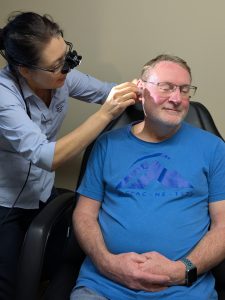
Microsuction is a modern and highly effective method of ear wax removal. The procedure uses a small medical suction device and a microscope or magnifying loupe to carefully remove wax from the ear canal. Unlike ear syringing, microsuction does not involve water, making it a safer option for many patients, particularly those with a history of ear infections, perforated eardrums, or previous ear surgery.

The procedure is typically quick, taking between 15 and 30 minutes, and most patients experience immediate improvement in hearing and comfort. Microsuction is generally well tolerated, although some people may notice a mild tickling sensation or temporary sensitivity during treatment.

For the best results, patients are often advised to soften the wax with a recommended spray for several days before their appointment. Ear wax should not be removed with cotton buds, as these can push wax deeper into the ear canal and increase the risk of blockage.

Microsuction is considered one of the safest and most precise methods of ear wax removal when performed by a trained healthcare professional. Ear wax microsuction services are available at Jervis Bay Hearing Centre, where experienced clinicians provide gentle, professional ear care to help restore hearing comfort and maintain ear health. Whether you are experiencing blocked ears, reduced hearing, or discomfort caused by excess wax, the team at Jervis Bay Hearing Centre can assess and treat your condition using safe and effective microsuction techniques.
Ready to hear clearly again? Ear wax microsuction is available at Jervis Bay Hearing Centre, providing a fast, safe, and effective solution for blocked ears and excess wax buildup. Don’t put up with muffled hearing or discomfort any longer. Book your appointment today and experience the difference professional ear care can make. Call Jervis Bay Hearing Centre.

Read More »
News and Events

From Berlin: Sharing Three Decades of Tinnitus Expertise

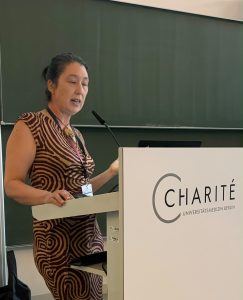
Just over a year ago, I had the privilege of being invited to speak at the International Tinnitus Research Initiative in Berlin. Today, stood at the podium delivering two presentations on tinnitus, drawing on more than 30 years of experience in audiology. It was an honour, and a rewarding opportunity to genuinely contribute to ongoing discussions in this complex and multifaceted field.

The audience consisted of leading academics from around the world, researchers, epidemiologists and clinical practitioners, creating an exceptional environment for the exchange of ideas and expertise. My presentations outlined my approach as well as the emergence of somatic symptoms and Hypercusis with severe distressing tinnitus from a clinical perspective. I was also grateful to join a symposium presenting evidence based practice and joining a leading UK ENT, Psychiatrist for robust discussion. Our profession has made such progress in understanding this complex and often challenging condition.

I was delighted by the positive reception from colleagues. Presenting to such a distinguished international audience is always encouraging and, if I’m honest, I’m feeling a little chuffed and more than a little relieved now that the talks are complete.

I was also deeply humbled to represent Jervis Bay Hearing Centre on the world stage. It was a privilege to showcase a leading-edge approach to tinnitus care, one that is firmly grounded in both scientific evidence and decades of clinical experience. Being able to share practical outcomes and contribute to global conversations about tinnitus management reinforced the value of combining research excellence with patient-centred care.

One of the most valuable aspects of meetings like these is the opportunity to collaborate and learn across disciplines. Tinnitus is a multifaceted condition that benefits from the collective expertise of Audiologists, Neuroscientists, Psychologists, Physicians, and Researchers working together toward better outcomes for patients.

After more than three decades in clinical practice, I remain convinced that continuing education is fundamental to delivering excellent hearing healthcare. As new research emerges, lifelong learning enables clinicians to tackle increasingly difficult problems, including complex tinnitus cases. By sharing knowledge, challenging assumptions, and embracing innovation, we move closer to our shared goal of reducing patient suffering and improving quality of life for those affected by tinnitus.

Read More »
News and Events

Reflections, on winning a business award 2026.

Winning a business award is not just recognition of excellence; it is a reflection of a deep commitment to the community we serve. Jervis Bay Hearing Centre is proud to be an independent, locally owned audiology practice dedicated to improving the hearing health and wellbeing of people across the Shoalhaven region, including Vincentia, Nowra, Ulladulla, Sussex Inlet, and surrounding communities.

For more than two decades, our mission has been to provide accessible, evidence-based, and person-centred hearing care that empowers individuals to reconnect with the people, activities, and experiences that matter most. We believe hearing healthcare is about more than technology. It is about listening, understanding, and supporting every person on their unique journey. Our comprehensive services include hearing assessments for adults and children, hearing aid fitting and rehabilitation, tinnitus and sound sensitivity management, cochlear implants, wax microsuction, workplace hearing assessments, and community education programs.

We are passionate advocates for early intervention, preventative hearing health, and ensuring regional Australians can access high-quality services close to home. At Jervis Bay Hearing Centre, our success is measured not only by business growth but by the lives we help transform. This award celebrates our dedicated team, our trusted partnerships, and our unwavering commitment to delivering exceptional hearing healthcare that enriches lives and strengthens our community.

We are humbled to win the Business Award for Excellence and are grateful to all our wonderful patients who have given us their unwavering support and trust.

Read More »