Taking Your Grandparents to Museums Could Improve Their Health

Taking Your Grandparents to Museums Could Improve Their Health
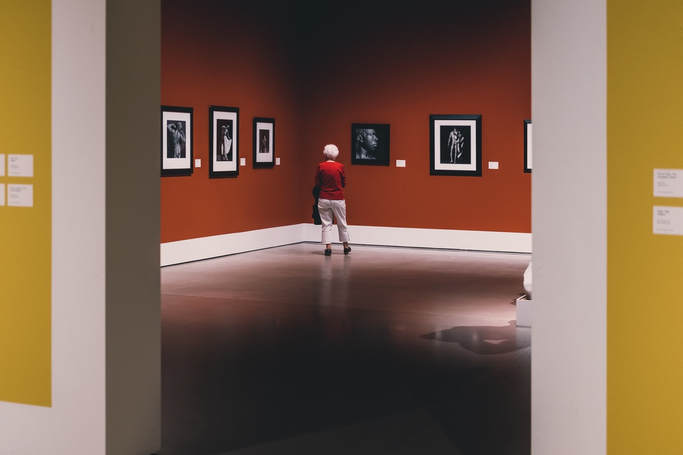
There’s good news for senior citizens with museum memberships: Research published last week by the National Endowment for the Arts (NEA) found that “older adults” who attended cultural events, from museum exhibitions to the opera, reported better mental and physical health than those who did not.
While previous research has mainly focused on the relationship between art creation and health, “Staying Engaged: Health Patterns of Older Americans Who Participate in the Arts” looked at both art creation and attendance. Compiled by Drs. Kumar B. Rajan and Rekha S. Rajan, the study utilized 15 years of health data from 1,498 adults over the age of 55, comparing their well being to those same adults’ self-reported levels of arts participation in 2014.
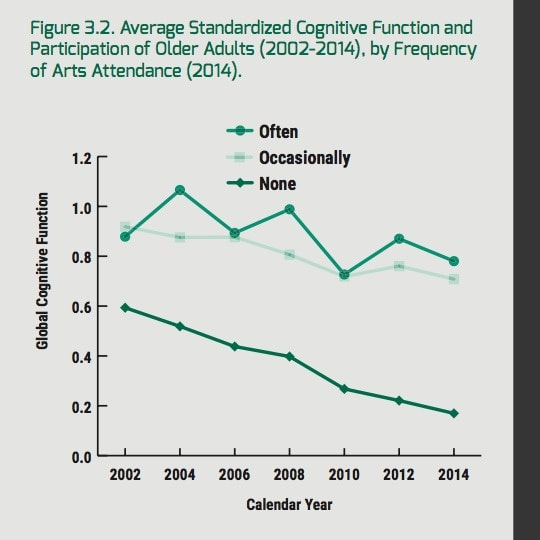
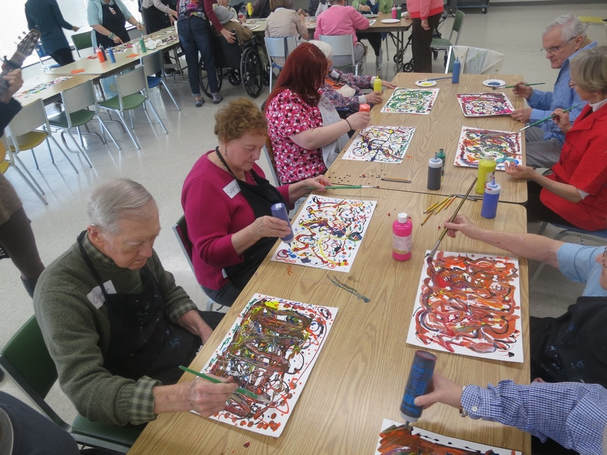
The pair found that those who both created as well as attended art “reported better health outcomes that year (lower rates of hypertension and greater cognitive and physical functioning) than did adults who neither created nor attended art.” Adults who either created art or attended exhibitions also “experienced slower rates of decline in cognitive and physical functioning over the last decade, and less growth in hypertension, compared with other older adults.”

The report stresses, however, that the link between art attendance and better health outcomes does not mean that art attendance causes those outcomes, but rather that there is a correlation between the two.
Surprisingly, the study found that adults who reported only attending cultural activities, from those related to art to theater to film, had levels of overall well being similar or close to those who attended cultural events and created art.
To reach that conclusion, the authors used 2014 data from the government-administered Health and Retirement Study’s new Culture and Arts module. The pair broke respondents down into three groups: those who attended art exhibitions, those who created art, and those who both created and attended art. They compared these cohorts with respondents who did no art-related activity at all.
To assess health, the study looked at the “measurable outcomes” of cognitive function, physical ability, and cardiovascular health. Cognitive health was measured by self-reported memory and functioning, whereas physical ability was gauged in terms of limitations in daily activity, and cardiovascular health on self-reported hypertension or high blood pressure.
Simply identifying with positive statements about appreciating or enjoying art was also correlated with lower hypertension rates, lower physical disability, and increased cognitive function overall. Appreciating the arts was also linked to a slower rate of decline in all three areas. In terms of attitudes towards art, Rekha Rajan said that there was value even for participants who simply reported that they appreciated the arts or just saw them as important.
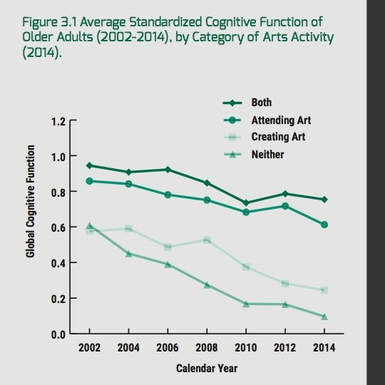
The frequency with which older adults make or attend art may also be a factor. “The more often they do these activities and the more various kinds of activities they do seems to correlate with a healthier profile than those who do a limited number of those activities,” said Sunil Iyengar, director of the Office of Research & Analysis for the NEA. “So that suggests that intensity or dosage of arts participations seems to be associated with these benefits.”
He conceded, however, that something of a chicken and egg situation may be at play. “Is it that healthy people engage with the arts more? Or is it that adults that engage in the arts seem to have the healthiest outcomes?” he mused. The answer “is probably a little of both,” he noted. “In fact, there seems to be mutually reinforcing benefit.”

The Rajans’ work comes amid growing literature on the potential health benefits associated with art-making in both therapeutic and non-therapeutic settings. According to Iyengar, the body of research (much of it produced by the NEA) has found a variety of benefits associated with art creation for adults who make art or take art lessons. “When they engage with the arts,” Iyengar explained, “you tended to see such things as even reduced hospital stays for older adults.”
That simple audience attendance is also positively linked with health benefits is particularly notable, however, following a recent survey which found that older adults have constituted the only demographic with increasing rates of art attendance over the last decade.
While increasing attendance has spurred an interest in creating and expanding opportunities for older members of society to create and attend art, Rajan pointed to a major barrier to entry. “How can we expect adults to be able to participate in these experiences if they’re from a lower socio-economic status or just don’t have access?” she said.
For those with physical limitations or cognitive disability, lack of access or perceived lack of access to arts venues often stymie potential benefits. Previous research from the NEA cited only seven percent of disabled adults had attended a museum or other live arts event in 2012.

Both Iyengar and Rajan confirmed that access presents a formidable obstacle, but not necessarily one without a solution. Part of the solution lies in “making people aware that these opportunities are there for them,” Rajan explained.
Both Iyengar and Rajan also urged that while the research included a large and diverse swath of the population, more information and research over time is needed to discern a causation between art and better health. Iyengar emphasized that the NEA’s “descriptive findings” require substantiation by more research.

(Source: https://www.artsy.net)
You might also be interested in

News and Events

Ear Wax Microsuction: A Safe and Effective Solution

Ear wax, also known as cerumen, is a natural substance that protects the ears by trapping dust, dirt, and bacteria. However, excessive wax buildup can cause symptoms such as hearing loss, earache, tinnitus (ringing in the ears), dizziness, and a feeling of fullness in the ear. When this occurs, professional ear wax removal may be necessary.

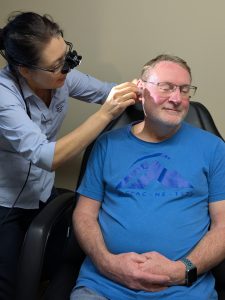
Microsuction is a modern and highly effective method of ear wax removal. The procedure uses a small medical suction device and a microscope or magnifying loupe to carefully remove wax from the ear canal. Unlike ear syringing, microsuction does not involve water, making it a safer option for many patients, particularly those with a history of ear infections, perforated eardrums, or previous ear surgery.

The procedure is typically quick, taking between 15 and 30 minutes, and most patients experience immediate improvement in hearing and comfort. Microsuction is generally well tolerated, although some people may notice a mild tickling sensation or temporary sensitivity during treatment.

For the best results, patients are often advised to soften the wax with a recommended spray for several days before their appointment. Ear wax should not be removed with cotton buds, as these can push wax deeper into the ear canal and increase the risk of blockage.

Microsuction is considered one of the safest and most precise methods of ear wax removal when performed by a trained healthcare professional. Ear wax microsuction services are available at Jervis Bay Hearing Centre, where experienced clinicians provide gentle, professional ear care to help restore hearing comfort and maintain ear health. Whether you are experiencing blocked ears, reduced hearing, or discomfort caused by excess wax, the team at Jervis Bay Hearing Centre can assess and treat your condition using safe and effective microsuction techniques.
Ready to hear clearly again? Ear wax microsuction is available at Jervis Bay Hearing Centre, providing a fast, safe, and effective solution for blocked ears and excess wax buildup. Don’t put up with muffled hearing or discomfort any longer. Book your appointment today and experience the difference professional ear care can make. Call Jervis Bay Hearing Centre.

Read More »
News and Events

From Berlin: Sharing Three Decades of Tinnitus Expertise

Just over a year ago, I had the privilege of being invited to speak at the International Tinnitus Research Initiative in Berlin. Today, stood at the podium delivering two presentations on tinnitus, drawing on more than 30 years of experience in audiology. It was an honour, and a rewarding opportunity to genuinely contribute to ongoing discussions in this complex and multifaceted field.

The audience consisted of leading academics from around the world, researchers, epidemiologists and clinical practitioners, creating an exceptional environment for the exchange of ideas and expertise. My presentations outlined my approach as well as the emergence of somatic symptoms and Hypercusis with severe distressing tinnitus from a clinical perspective. I was also grateful to join a symposium presenting evidence based practice and joining a leading UK ENT, Psychiatrist for robust discussion. Our profession has made such progress in understanding this complex and often challenging condition.

I was delighted by the positive reception from colleagues. Presenting to such a distinguished international audience is always encouraging and, if I’m honest, I’m feeling a little chuffed and more than a little relieved now that the talks are complete.

I was also deeply humbled to represent Jervis Bay Hearing Centre on the world stage. It was a privilege to showcase a leading-edge approach to tinnitus care, one that is firmly grounded in both scientific evidence and decades of clinical experience. Being able to share practical outcomes and contribute to global conversations about tinnitus management reinforced the value of combining research excellence with patient-centred care.

One of the most valuable aspects of meetings like these is the opportunity to collaborate and learn across disciplines. Tinnitus is a multifaceted condition that benefits from the collective expertise of Audiologists, Neuroscientists, Psychologists, Physicians, and Researchers working together toward better outcomes for patients.

After more than three decades in clinical practice, I remain convinced that continuing education is fundamental to delivering excellent hearing healthcare. As new research emerges, lifelong learning enables clinicians to tackle increasingly difficult problems, including complex tinnitus cases. By sharing knowledge, challenging assumptions, and embracing innovation, we move closer to our shared goal of reducing patient suffering and improving quality of life for those affected by tinnitus.

Read More »
News and Events

Reflections, on winning a business award 2026.

Winning a business award is not just recognition of excellence; it is a reflection of a deep commitment to the community we serve. Jervis Bay Hearing Centre is proud to be an independent, locally owned audiology practice dedicated to improving the hearing health and wellbeing of people across the Shoalhaven region, including Vincentia, Nowra, Ulladulla, Sussex Inlet, and surrounding communities.

For more than two decades, our mission has been to provide accessible, evidence-based, and person-centred hearing care that empowers individuals to reconnect with the people, activities, and experiences that matter most. We believe hearing healthcare is about more than technology. It is about listening, understanding, and supporting every person on their unique journey. Our comprehensive services include hearing assessments for adults and children, hearing aid fitting and rehabilitation, tinnitus and sound sensitivity management, cochlear implants, wax microsuction, workplace hearing assessments, and community education programs.

We are passionate advocates for early intervention, preventative hearing health, and ensuring regional Australians can access high-quality services close to home. At Jervis Bay Hearing Centre, our success is measured not only by business growth but by the lives we help transform. This award celebrates our dedicated team, our trusted partnerships, and our unwavering commitment to delivering exceptional hearing healthcare that enriches lives and strengthens our community.

We are humbled to win the Business Award for Excellence and are grateful to all our wonderful patients who have given us their unwavering support and trust.

Read More »